When purchasing or manufacturing peptides, one number tends to receive the most attention: purity. It’s often displayed prominently on a Certificate of Analysis (COA), shared with customers, and used as a benchmark for quality. While purity is an important measurement, it answers only one part of a much larger question.
A truly comprehensive peptide testing program goes far beyond a single purity percentage. Manufacturers, researchers, and distributors should understand what purity measures, what it doesn’t, and why independent third-party testing is essential for verifying both the quality and safety of peptide products.
Potency vs. Purity: Understanding the Difference
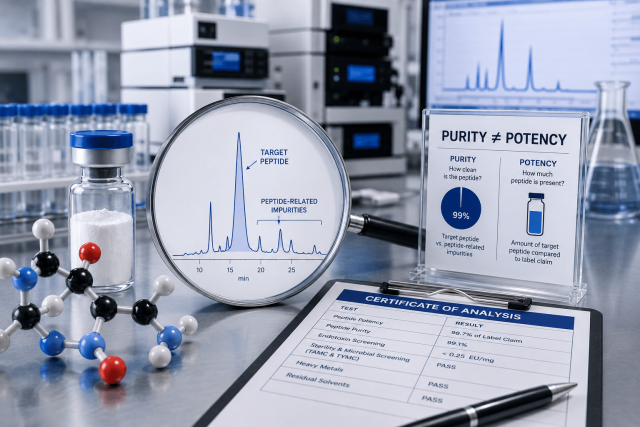
Although the terms are frequently used interchangeably, potency and purity measure two very different characteristics of a peptide.
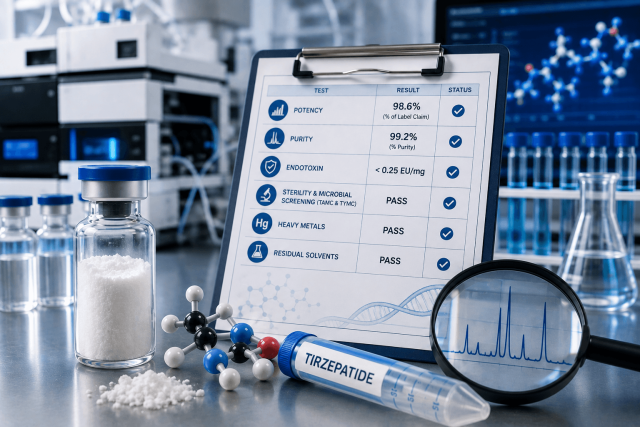
Potency determines how much of the target peptide is actually present compared to the labeled claim. If a vial is labeled as containing 10 mg of peptide but analytical testing determines it contains 9.6 mg, the potency is 96% of label claim. Potency testing confirms that the expected amount of active peptide is present.
Purity, however, measures how much of the detectable peptide material consists of the desired peptide versus related impurities such as truncated peptide sequences, oxidation products, degradation products, or synthesis byproducts. A peptide may contain the correct amount of material while still having a lower purity if unwanted peptide-related compounds are present.
The highest-quality peptide products demonstrate both high potency and high purity. A product can have excellent potency while containing elevated peptide impurities, or it can be highly pure while being underfilled. Looking at only one measurement provides an incomplete assessment of product quality.
What a Purity Percentage Actually Measures
Purity is typically determined using chromatographic techniques such as HPLC. During analysis, the sample is separated into individual components, allowing the laboratory to determine how much of the detected material corresponds to the target peptide versus related impurities.
This is a valuable measurement because it identifies peptide-related impurities created during synthesis or degradation. However, there is one important limitation:
Chromatography only measures what the analytical method is designed to detect.
Anything outside the scope of that method does not affect the reported purity percentage.
What Purity Does Not Tell You
A peptide can report 99% purity while still containing contaminants that chromatography is not intended to measure.
Examples include:
- Endotoxins
- Residual solvents
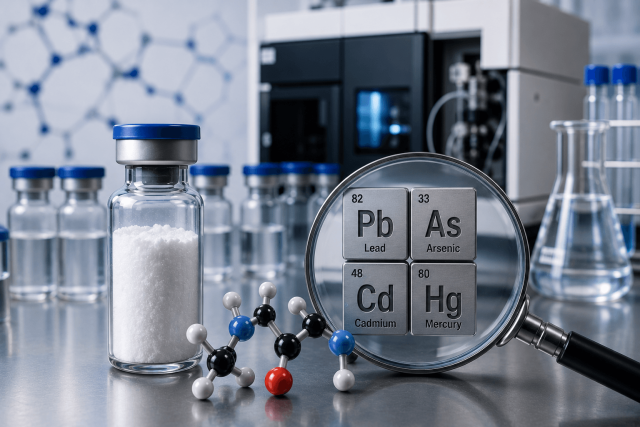
- Heavy metals
- Sterility concerns
- Residual moisture
- Salt and counterion species
- Foreign particulate matter
These contaminants originate from raw materials, synthesis, purification, manufacturing equipment, handling, storage, or packaging—not from the peptide itself. Since they are outside the chromatographic purity determination, they do not reduce the reported purity percentage.
In other words, a high purity result should never be interpreted as a complete assessment of product safety.
Why Comprehensive Contamination Testing Matters
For peptides intended to be reconstituted, product safety extends well beyond potency and purity.
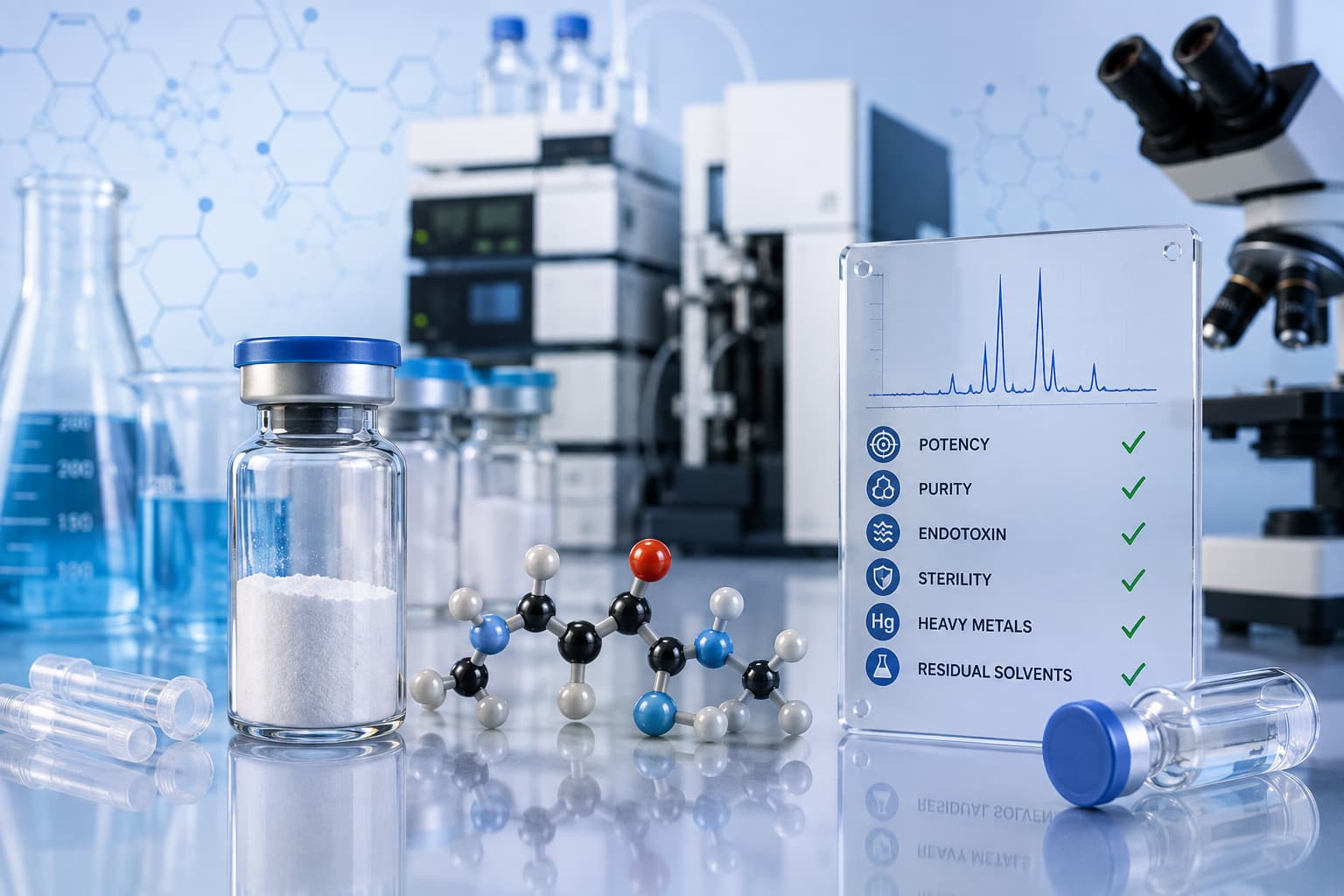
A comprehensive peptide testing program should evaluate contaminants that chromatography alone cannot identify, including:
- Endotoxins
- Sterility
- Heavy Metals
- Residual Solvents
These analyses provide critical information about manufacturing practices, process hygiene, raw material quality, and overall product safety.
Rather than viewing contamination testing as an optional add-on, manufacturers should consider it an essential component of a complete quality assurance program.
Detection Limits Matter
Another important question to ask any peptide testing laboratory is:
“What are your Limits of Detection (LOD) and Limits of Quantitation (LOQ)?”
A laboratory report stating that an analyte was “Not Detected” has little value unless the laboratory defines what level the analytical method was capable of detecting.
Published LOD and LOQ values provide transparency into the sensitivity of the analytical method and allow clients to understand exactly what the reported results mean.
Unfortunately, many laboratories do not publish these performance characteristics.
Accreditation Should Be Verified
Many laboratories advertise ISO/IEC 17025 accreditation, but fewer explain what that accreditation actually covers.
ISO/IEC 17025 accreditation is granted for a defined scope, including specific analytical methods, analytes, and sample types. Accreditation for one testing category does not automatically apply to every service a laboratory offers.
Before selecting a testing laboratory, ask for:
- Their ISO/IEC 17025 Scope of Accreditation
- The accrediting body
- Verification through the accrediting body’s public directory
A reputable laboratory should be willing to provide this information without hesitation.
Your Certificate of Analysis Represents Your Brand
For peptide manufacturers and distributors, a Certificate of Analysis is much more than a laboratory report.
It is often the first document customers review before deciding whether they trust a product. It is shared with distributors, posted online, referenced during purchasing decisions, and used to support quality claims.
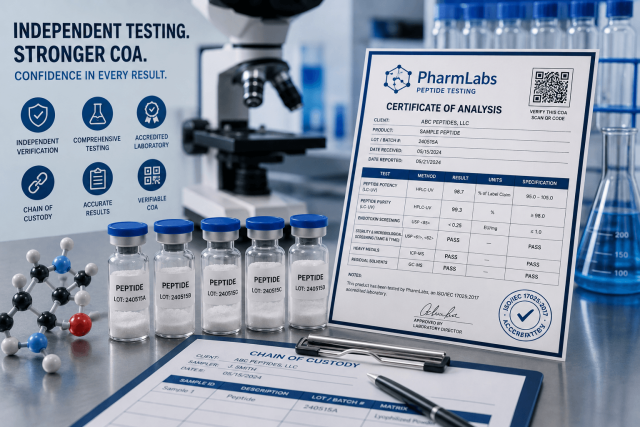
A professional COA should include:
- Clear analytical results
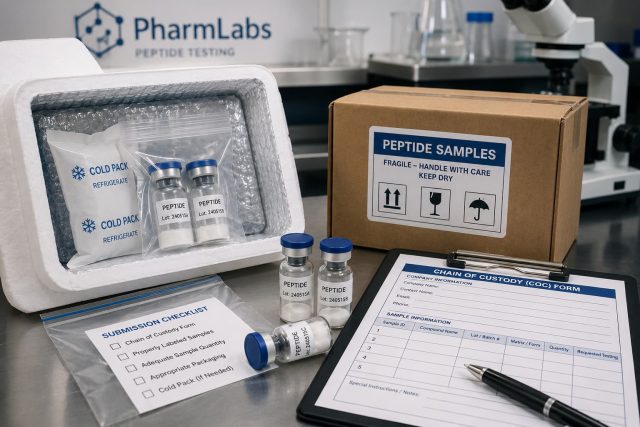
- Complete chain of custody documentation
- Batch traceability
- Secure verification features
- An easy-to-understand presentation
At PharmLabs, every Certificate of Analysis includes a unique QR code that allows recipients to verify the authenticity of the report, helping protect against altered or fraudulent certificates.
Why Manufacturers Choose PharmLabs
PharmLabs provides independent third-party peptide testing designed to verify both product quality and product safety.
Our laboratory offers:
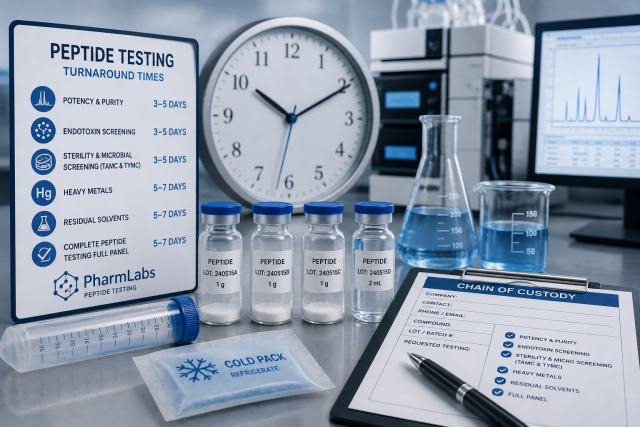
- Potency and purity testing for more than 14 peptide compounds
- Endotoxin testing
- Sterility testing
- Heavy metal analysis
- Residual solvent analysis
- Published Limits of Detection (LOD) and Limits of Quantitation (LOQ)
- ISO/IEC 17025:2017 accredited analytical methods
- DEA-licensed laboratory
- Fast turnaround times
- Secure client portal with complete chain of custody documentation
We also retain any remaining sample material for 30 days, allowing for reanalysis if questions arise before any remaining sample is securely destroyed.
Looking Beyond a Single Number
Purity is an important analytical measurement—but it is only one piece of the quality equation.
Manufacturers should evaluate peptide products based on potency, purity, contamination testing, analytical sensitivity, laboratory accreditation, and Certificate of Analysis integrity rather than relying solely on a purity percentage.
Choosing a qualified third-party peptide testing laboratory provides confidence not only in what your product contains, but also in what it does not contain.
If you’re looking for comprehensive peptide testing backed by validated analytical methods, rapid turnaround times, and exceptional customer support, PharmLabs is ready to help. Visit our Peptide Testing page or contact our laboratory to discuss your testing needs.
Ready to verify the quality and safety of your peptide products? PharmLabs offers independent third-party testing for potency, purity, endotoxins, sterility, heavy metals, and residual solvents, backed by ISO/IEC 17025:2017 accredited methods and fast turnaround times. Request a quote today or contact our team to discuss your testing requirements.