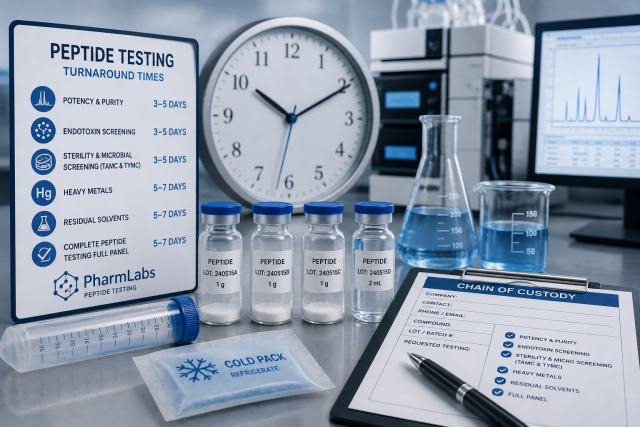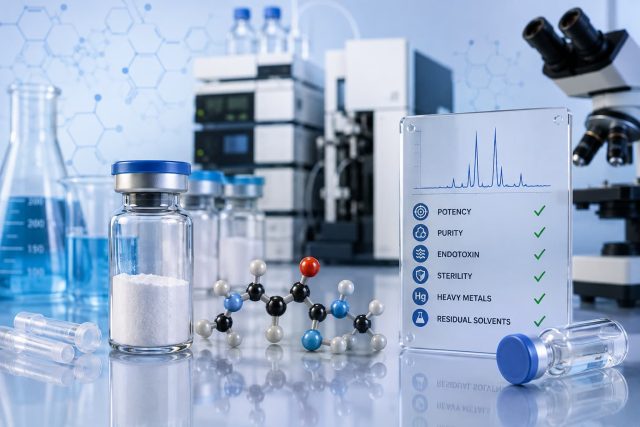
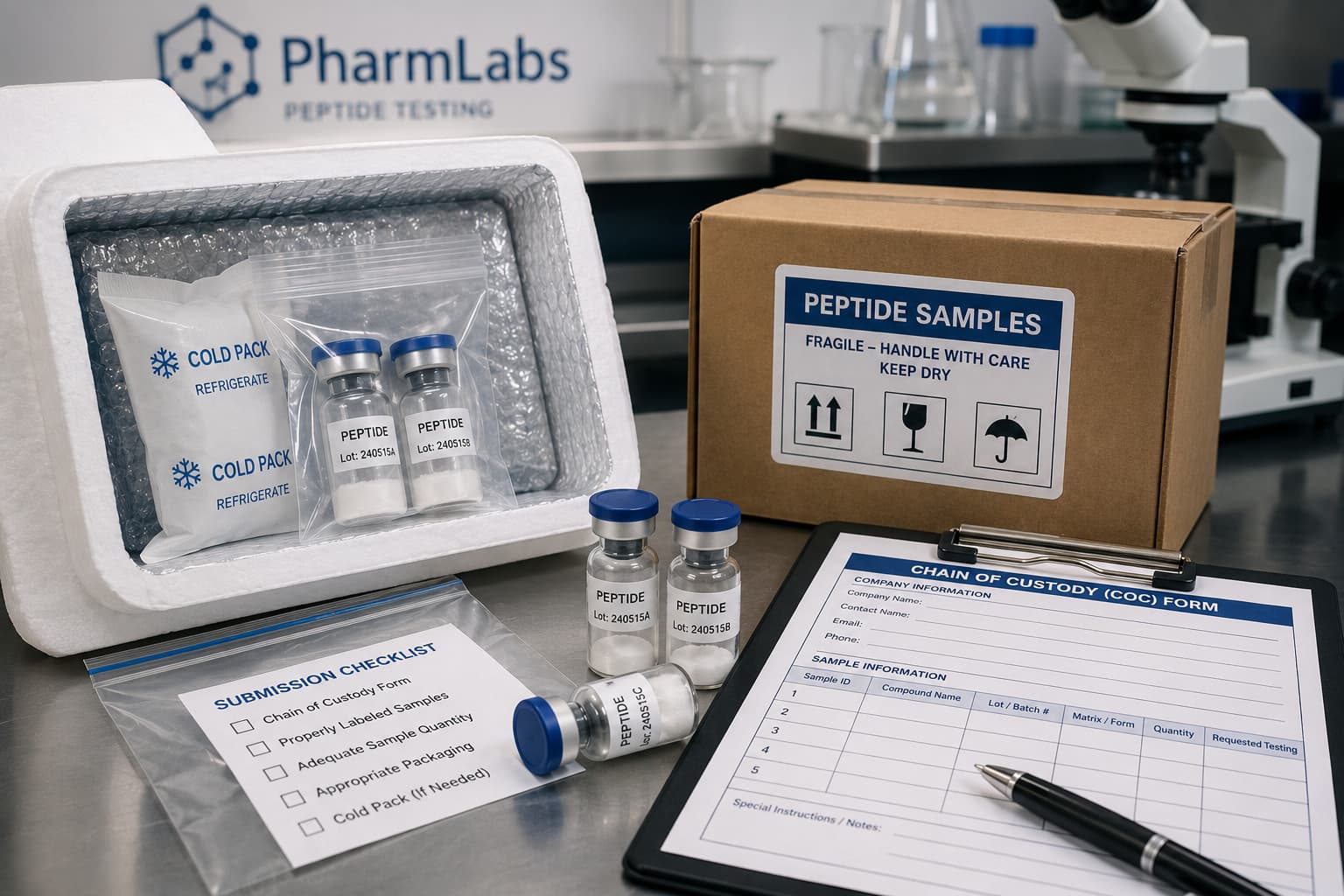
Submitting peptide samples for laboratory testing is straightforward, but proper packaging, labeling, and documentation can make the difference between immediate sample processing and unnecessary delays. Most submission issues are not caused by the analytical testing itself—they result from incomplete paperwork, insufficient sample quantities, mismatched labels, or shipping conditions that compromise sample integrity before the laboratory ever receives the package.
By following a few simple best practices, you can help ensure your samples arrive in optimal condition and move through the laboratory efficiently.
Does My Peptide Sample Need Cold Packaging?
The answer depends primarily on the physical form of your sample.
Lyophilized (freeze-dried) peptide powders are generally very stable during normal domestic shipping. Because the water has been removed, degradation reactions such as hydrolysis occur much more slowly, making lyophilized material well suited for ambient transportation over short transit times.
Reconstituted peptides in solution, however, are considerably more sensitive to temperature. Exposure to elevated temperatures during shipping can accelerate degradation and potentially affect analytical results. When shipping peptide solutions, insulated packaging, cold packs, and expedited shipping are strongly recommended to help preserve sample integrity.
Although PharmLabs can accept samples in any matrix or physical form, manufacturers should use shipping conditions that best protect the quality of their products throughout transit.
What Is the Best Way to Package Peptide Samples?
Proper packaging helps protect samples from three primary risks:
- Heat
- Moisture
- Physical damage
Whenever possible, keep samples in their original sealed containers. Lyophilized peptides readily absorb moisture from the surrounding environment if exposed to humidity, potentially affecting stability and analytical results.
Place vials inside a rigid shipping container with adequate cushioning to prevent movement or breakage during transit. If cold packs are used, ensure there is sufficient insulation and enough cooling capacity for the anticipated shipping duration.
Whenever possible, avoid shipping packages that are likely to arrive over a weekend or holiday. Extended carrier storage can expose samples to uncontrolled temperatures and unnecessary delays.
How Should Peptide Samples Be Labeled?
Clear, consistent labeling is one of the easiest ways to prevent processing delays.
Each submitted sample should include:
- Compound name
- Lot or batch number
- Any internal sample identifier used by your organization
These identifiers should match your Chain of Custody (COC) form exactly. Even minor discrepancies between vial labels and paperwork may require clarification before testing can begin.
If submitting multiple batches or multiple compounds, ensure every container is uniquely labeled so there is no possibility of confusion during sample receipt.
Accurate labeling also supports complete chain of custody documentation, providing traceability from sample receipt through final reporting.
What Paperwork Should Be Included?
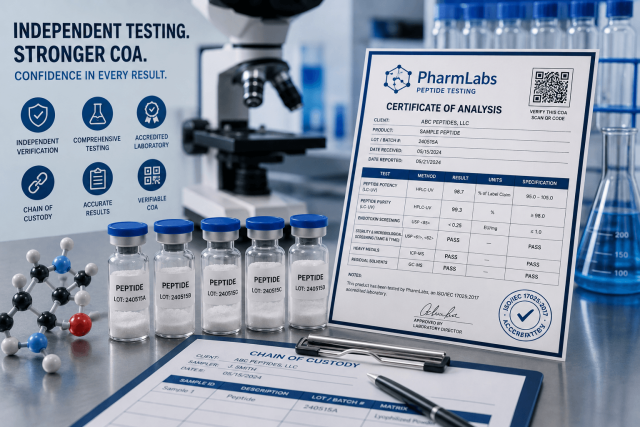
Every PharmLabs peptide submission requires a completed Chain of Custody (COC) Form, available on our website.
Your COC should include:
- Company name and contact information
- Compound name
- Lot or batch number
- Requested testing services
- Sample quantity
- Sample matrix or physical form
Providing complete information allows our scientists to begin testing promptly and helps ensure accurate interpretation of your analytical results.
If there are any unique characteristics about your sample—such as excipients, unusual salt forms, or processing solvents—include those details on your COC whenever possible.
Why Is the Chain of Custody Important?
The Chain of Custody (COC) documents the transfer of your samples from submission through final reporting.
It establishes traceability between:
- The submitted sample
- Your batch or lot number
- Requested analyses
- Final Certificate of Analysis (COA)
Maintaining complete chain of custody records helps provide confidence that every analytical result corresponds to the correct sample.
Can PharmLabs Accept Controlled Compounds?
PharmLabs is a DEA-registered analytical laboratory and can receive many regulated compounds within the scope of its registrations.
If your sample may fall under federal or state controlled substance regulations, we recommend contacting our laboratory before shipping so our team can confirm acceptance requirements.
Should I Use a Domestic Testing Laboratory?
Using a domestic analytical laboratory offers several advantages.
Domestic shipments generally experience:
- Shorter transit times
- No customs delays
- Lower shipping costs
- Reduced risk of temperature excursions
- Faster communication
For manufacturers performing routine quality control or iterative product development, domestic testing can significantly reduce overall project timelines.
Common Sample Submission Mistakes
Most submission delays result from a small number of avoidable issues:
- Labels that do not match the Chain of Custody form
- Missing lot or batch numbers
- Insufficient sample quantities
- Shipping peptide solutions without temperature protection
- Inadequate packaging resulting in broken containers
- Weekend deliveries causing unnecessary storage delays
- Incomplete paperwork
Taking a few extra minutes before shipping can help avoid days of unnecessary delays.
Submitting Samples to PharmLabs
Submitting peptide samples to PharmLabs is simple.
- Complete the Chain of Custody (COC) form available on our website.
- Label each sample with the compound name and lot or batch number.
- Package samples securely using appropriate protection for the sample type.
- Ship your samples to the PharmLabs laboratory during normal business days whenever possible.
Additional Submission Information
- Chain of Custody (COC) form is required and available on our website.
- Advance shipment notification is not required but appreciated.
- Cold packaging is recommended for temperature-sensitive samples, based on the manufacturer’s best practices.
- PharmLabs accepts lyophilized powders, solutions, finished products, and other peptide matrices.
- PharmLabs does not provide sample collection kits or shipping materials.
- Contact our Client Care team with any questions before submitting your shipment.
Ready to Submit Your Samples?
PharmLabs provides independent third-party peptide testing for potency & purity, endotoxins, sterility, heavy metals, and residual solvents with fast turnaround times and ISO/IEC 17025:2017 accredited analytical methods.
Before shipping your samples, download our Chain of Custody (COC) Form and Peptide Sample Size Submission Guide to ensure your submission is complete and ready for testing.