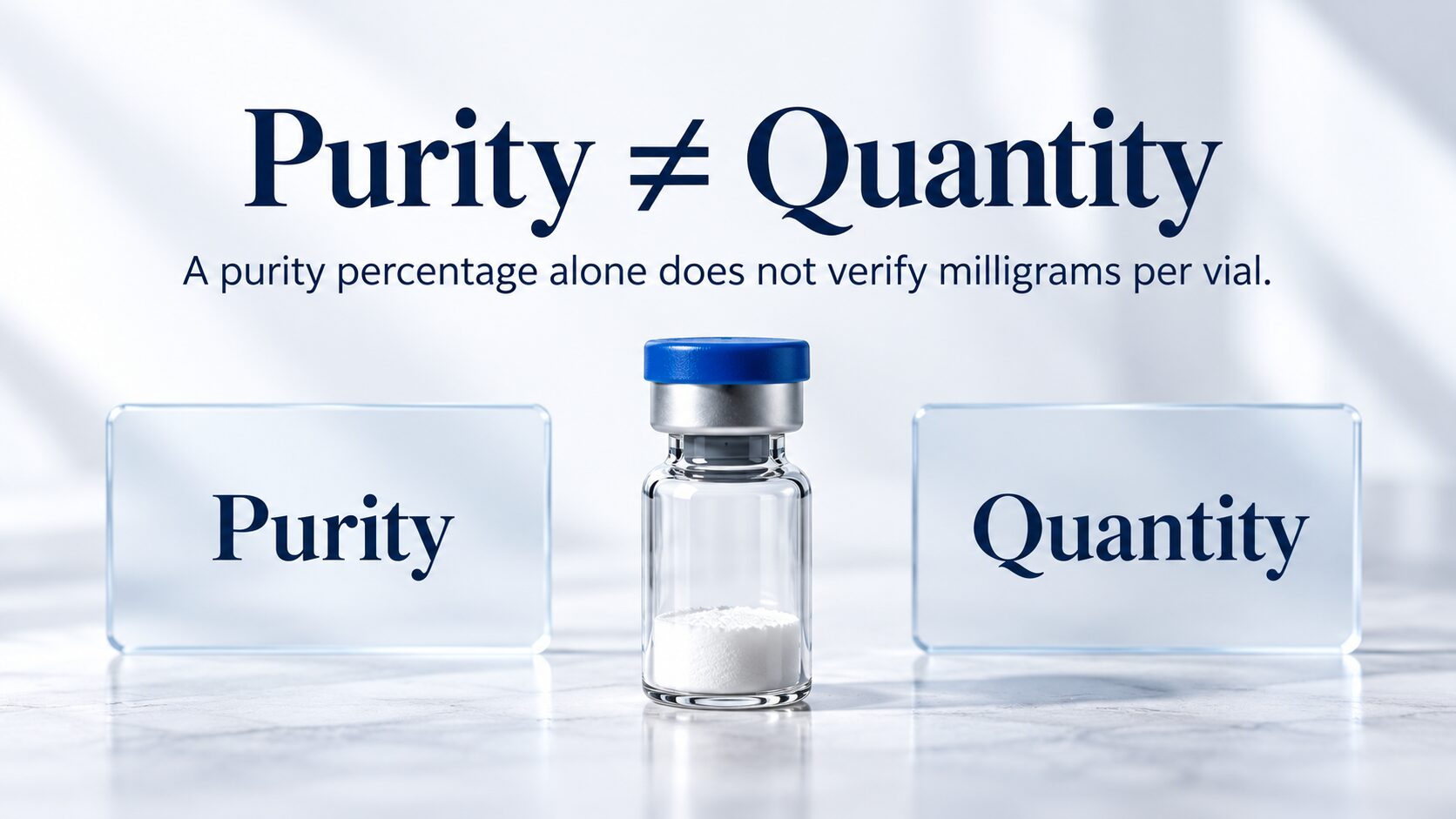
For peptide manufacturers, suppliers, and research organizations, that distinction matters when evaluating a batch or checking a supplier’s claims. Understanding the report helps you decide whether you have the evidence you need or should request additional testing.
What is HPLC testing?
HPLC testing separates components in a sample so a laboratory can analyze them. A pump moves a liquid containing the sample through a packed column. Components interact differently with the column and move through it at different rates. A detector records the components as they emerge. [1]
The resulting graph is called a chromatogram. Its peaks show the detector’s response over time. Peptide purity testing commonly uses reversed-phase HPLC with ultraviolet detection, often shortened to HPLC-UV. [1, 2]
HPLC can support several types of analysis. To interpret a result, first establish whether the laboratory measured relative purity, quantified the target peptide, or performed testing to support identity.
What an HPLC purity percentage measures
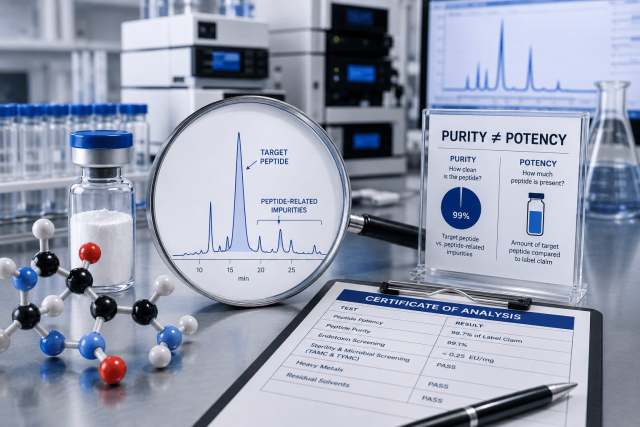
Many peptide purity reports express results as area percent. The laboratory compares the area of the peak assigned to the target peptide with the total area of the peaks included in the calculation. [2]
For example, if the target peak accounts for 99% of the total integrated peak area, the reported chromatographic purity is 99%. This describes the signal measured under that method’s conditions. It does not automatically mean that 99% of the powder’s weight is the target peptide. [2, 3]
The method’s separation and detection capabilities matter. Some impurities can overlap with the target peak, a problem called co-elution. A high reported percentage should therefore be read alongside the method and its demonstrated ability to distinguish the target peptide from relevant impurities. [5]
Why 99% purity does not verify a 10 mg label claim

Consider a hypothetical vial labeled “10 mg” with an HPLC purity result of 99%. Those two numbers do not establish that the vial contains 9.9 mg of the target peptide. The label states a claimed amount, while the purity result describes relative chromatographic composition.
Peptide powder can include water and counter-ions, such as acetate or trifluoroacetate. These contribute to its weight without being the target peptide. Chromatographic purity and peptide content are distinct measurements. [3]
Verifying quantity requires an appropriate quantitative assay. HPLC can do this when the method uses suitable reference standards and calibration, together with the sample preparation and dilution calculations needed to report the amount present. Depending on the assay and sample, results might be reported as concentration, amount per unit, or a percentage. [4]
PharmLabs uses the term “potency” for testing the amount of target peptide relative to a label claim. In this context, the measurement concerns chemical quantity; it does not demonstrate a biological effect or clinical effectiveness. [8]
When ordering testing, state the question directly: “How much of this peptide is in the submitted sample?” A purity percentage alone will not answer it.
How HPLC relates to peptide identity
A large, clean peak does not by itself establish that a sample contains the expected peptide. Comparing retention time with a suitable reference standard can support identification, but closely related compounds may require additional analytical evidence. [4, 5]
Peptide identity testing may involve complementary techniques such as liquid chromatography with mass spectrometry or tandem mass spectrometry. The appropriate combination depends on the molecule and the question being answered. Ask the laboratory how identity is assessed and whether that work is included in your requested service. [5]
Which concerns require testing beyond HPLC purity
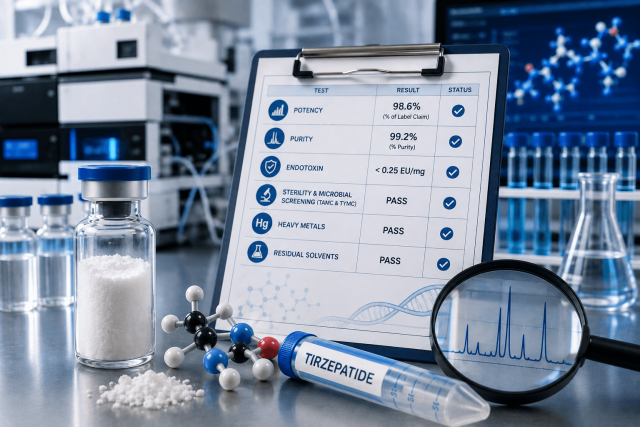
Routine HPLC-UV purity analysis does not provide an all-contaminants screen. A broader testing plan may include the following analyses. [8]
| Concern | Additional testing to discuss with the laboratory |
|---|---|
| Bacterial endotoxins | Endotoxin testing |
| Microbial contamination | Microbial testing appropriate to the product and its requirements |
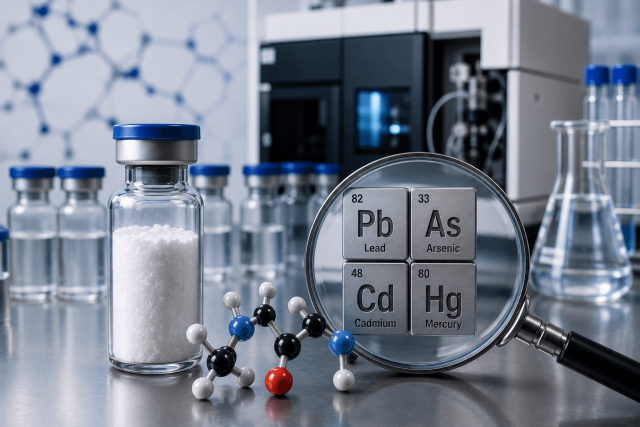
| Heavy metals | Testing for specified metals |
| Residual solvents | Testing for specified solvents remaining from manufacturing |
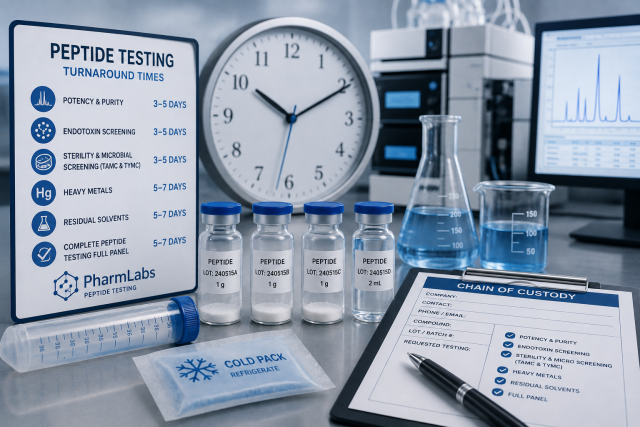
Microbial enumeration and sterility testing are different procedures. Confirm which analysis is being performed rather than treating the terms as interchangeable. [6, 7]
Each result applies to the targets and limits of its method. Even a broader panel does not, by itself, establish that a peptide product is suitable for human use.
What to check on a peptide certificate of analysis
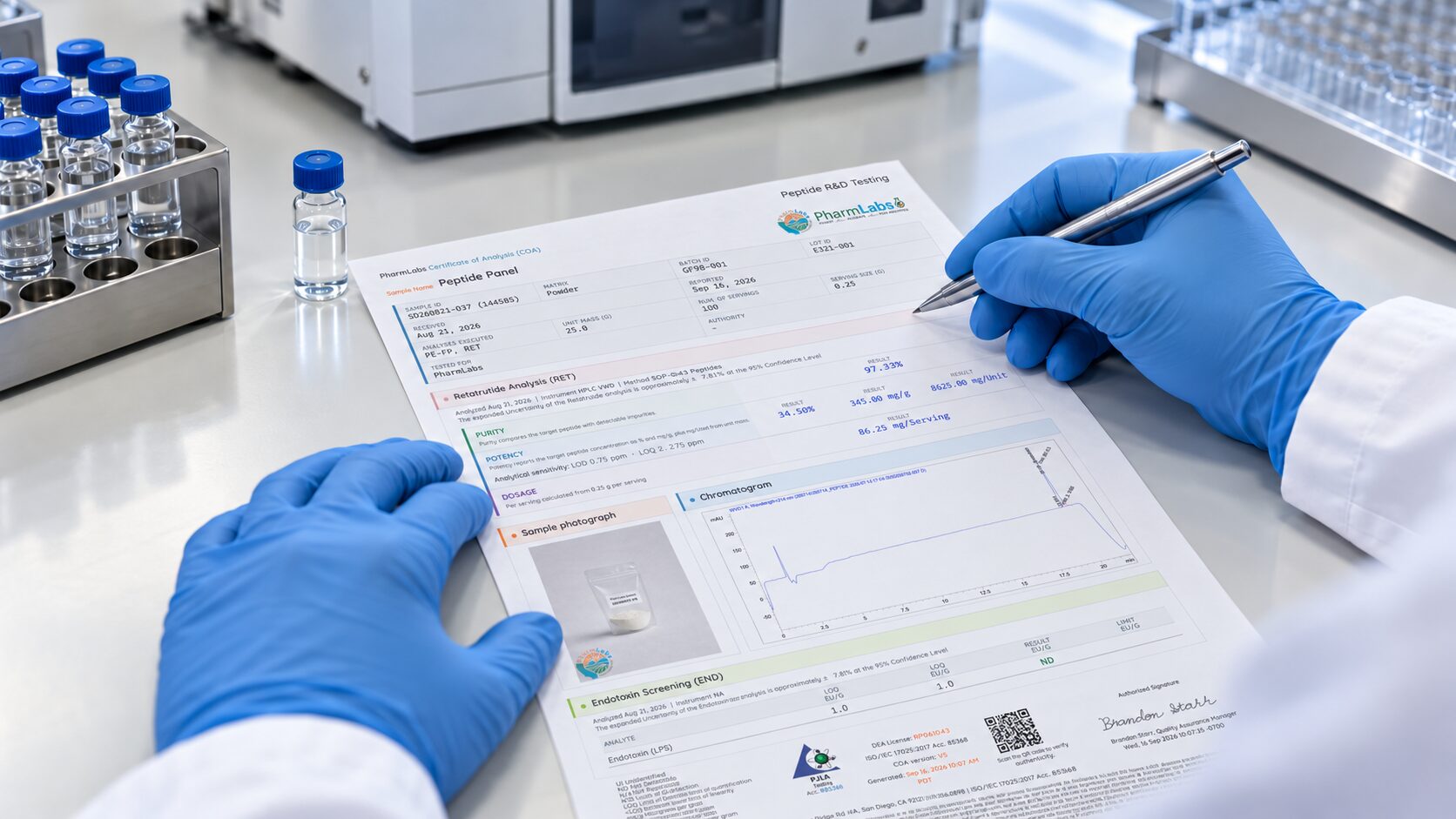
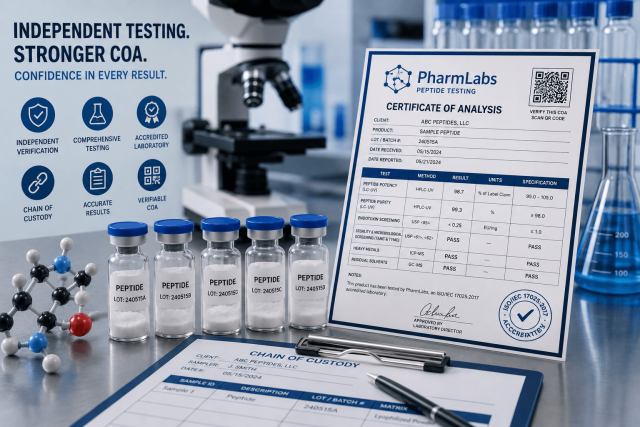
A certificate of analysis, or COA, should help you connect the submitted sample with specific analytical results. When reviewing one, use these checks:
- Match the sample and lot. Confirm that the compound name, sample description, and lot or batch identifier correspond to the material you are evaluating.
- Read the units. Look for the distinction between purity as area percent and a quantitative result such as mg/mL or mg per unit. Ask what any reported percentage represents.
- Identify the tests performed. Check which results address purity, quantity, identity, and specific contaminants. Do not assume that an unlisted test was included.
- Ask about the method. Confirm that it is suitable for your peptide and sample type. Where relevant, discuss detection and quantitation limits and how results below those limits are reported.
- Verify the report. Check the issuing laboratory, report identifier, and dates. If a supplier provides the COA, use the laboratory’s available verification process or contact it to confirm authenticity.
- Consider sampling. A report describes the sample submitted for testing. Drawing conclusions about an entire lot requires a sampling plan that represents that lot.
If accreditation is part of your supplier requirements, request the laboratory’s current scope and confirm that it covers the activities you need. Laboratory accreditation applies to the activities within that scope. [9]
When independent peptide testing is useful
Consider independent testing when qualifying a new supplier, investigating an unexpected result, comparing received material with a label claim, or assessing material after a manufacturing or storage change.
Choose the testing around the decision you need to make. A supplier qualification may require several quality attributes. An amount discrepancy calls for quantitative analysis. A contamination concern needs testing directed at the suspected contaminant.
Sharing that purpose with the laboratory helps it recommend an appropriate panel and explain what the results will establish.
Frequently asked questions
Is HPLC testing the same as mass spectrometry?
No. HPLC separates sample components. Mass spectrometry measures ions by mass-to-charge ratio. The techniques can be combined in LC-MS, but an “HPLC tested” claim does not establish that mass spectrometry was performed. [1]
Can HPLC measure how many milligrams of peptide are present?
Yes, with a suitable calibrated quantitative method and the necessary sample calculations. An HPLC area-percent purity result alone does not establish the amount in milligrams. [4]
How much sample should I send for peptide testing?
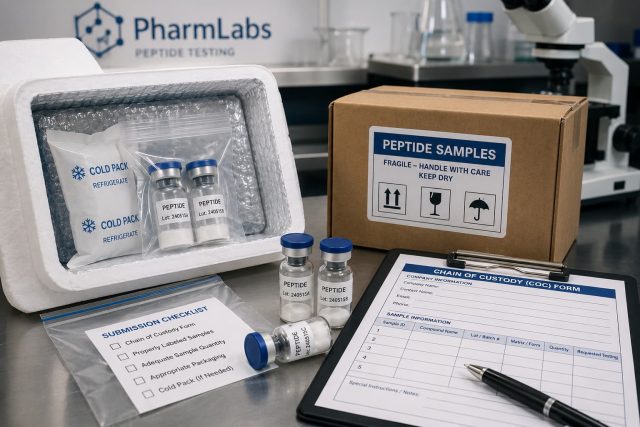
Sample requirements depend on the product and the tests requested. Confirm the required amount and preparation instructions with PharmLabs before shipping. [8]
Request peptide testing from PharmLabs
PharmLabs provides peptide purity and potency testing using validated HPLC methods, with additional options for endotoxins, microbial contamination, heavy metals, and residual solvents. Results are delivered through the client portal as certificates of analysis. [8]
Tell us the compound, sample type, number of samples, and what you need to verify. Our team will confirm testing options, sample requirements, pricing, and turnaround before you submit material. [8]
Request a peptide testing quote
Or call 619-356-0898.
Sources
- Thermo Fisher Scientific. HPLC Basics
- Bachem. Peptide User Guide, Quality Control of Peptides
- Bachem. Frequently Asked Questions, Analysis of Peptides
- Waters. Identifying and Quantitating Compounds Using HPLC
- European Medicines Agency. Guideline on the Development and Manufacture of Synthetic Peptides, section 4.4.2
- United States Pharmacopeia. Chapter 61, Microbial Enumeration Tests
- United States Pharmacopeia. Chapter 71, Sterility Tests
- PharmLabs. Peptide Testing Services
- Perry Johnson Laboratory Accreditation. PharmLabs Certificate and Scope of Accreditation L25-933-R1