A certificate of analysis (COA) is the lab report that travels with a batch. It says what was tested, how it was tested and what the lab found. For retatrutide, that report carries more weight than usual.
Retatrutide is an investigational compound developed by Eli Lilly. It is not FDA-approved, and Lilly has said it plans to file for approval in early 2027. With no approved product to compare against, the COA is the main evidence of what is actually in a vial. A purity percentage on its own answers one question. A complete retatrutide COA answers several.
What a COA on a retatrutide vial should tell you
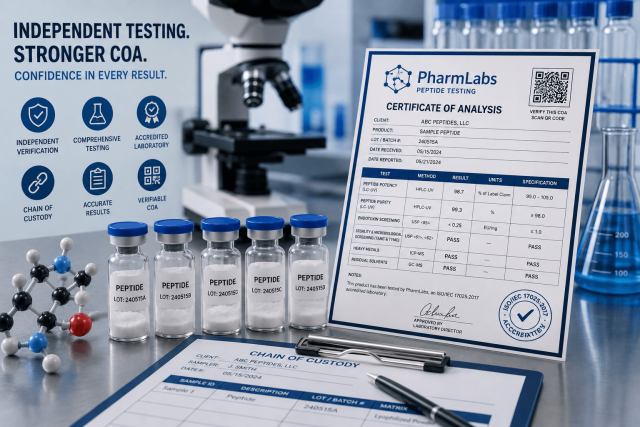
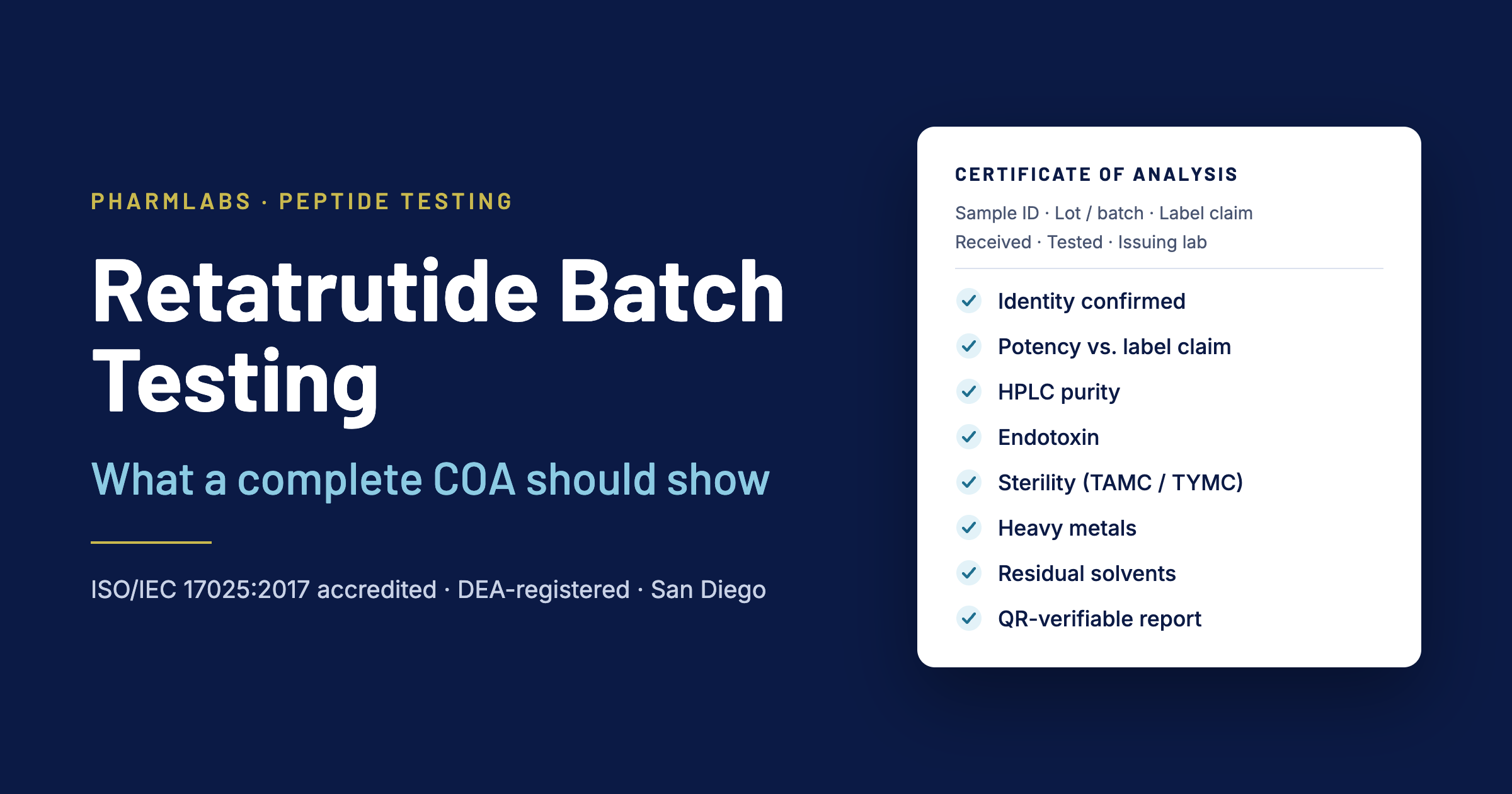
A COA is issued by a testing laboratory for one specific sample or batch. A useful one names the compound, the batch, the tests performed, the methods used and the results, with units and method limits. A seller’s in-house QC report and a COA from an independent laboratory are different documents. Both can be useful, but only one is an outside check.
Start with sample and batch identification
A retatrutide COA should clearly show:
- The compound name (retatrutide; its development code is LY3437943)
- The sample ID and lot or batch number
- The label claim, such as 10 mg per vial
- The client or manufacturer
- The dates the sample was received and tested
- The laboratory that performed the work
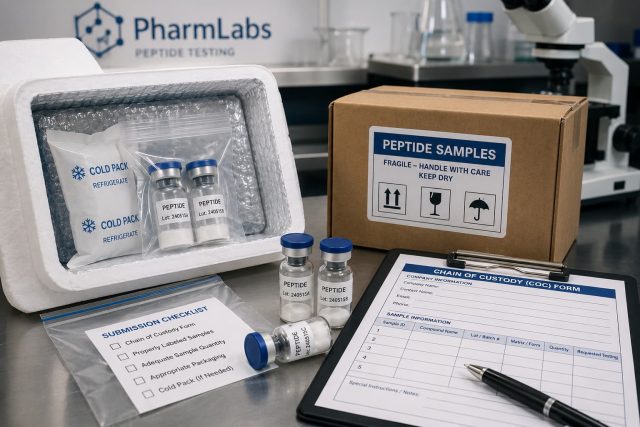
These details should match the vial and the Chain of Custody form submitted with the sample. A COA that can’t be tied to a specific batch says little about the vial in front of you.
Identity: is it actually retatrutide?
Identity testing confirms that the main compound in the sample is retatrutide, not another peptide. Retatrutide is a 39-amino-acid peptide with several chemical modifications and a fatty-acid side chain, and it belongs to the same family of compounds as tirzepatide and semaglutide. A substituted or mislabeled product can still produce a clean-looking purity number, so identity is the first question a COA should answer.
Retatrutide potency and purity
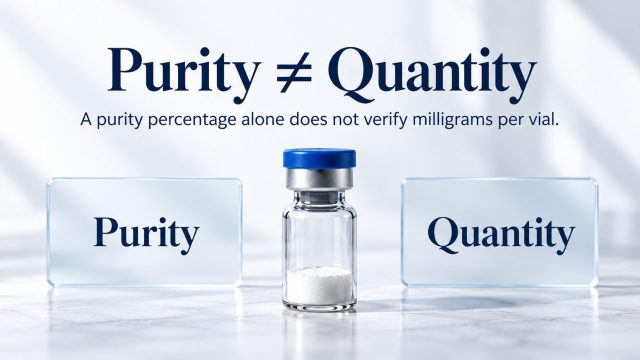
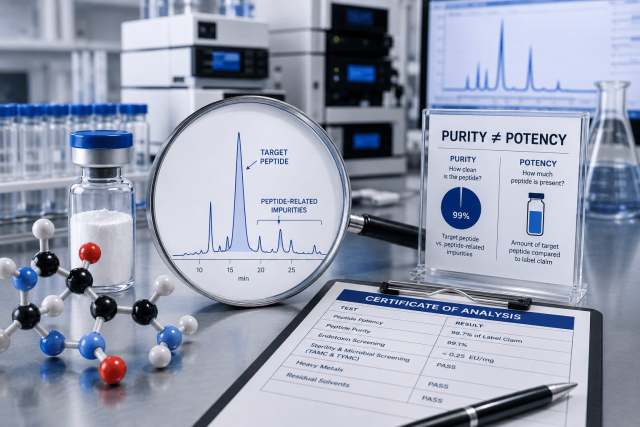
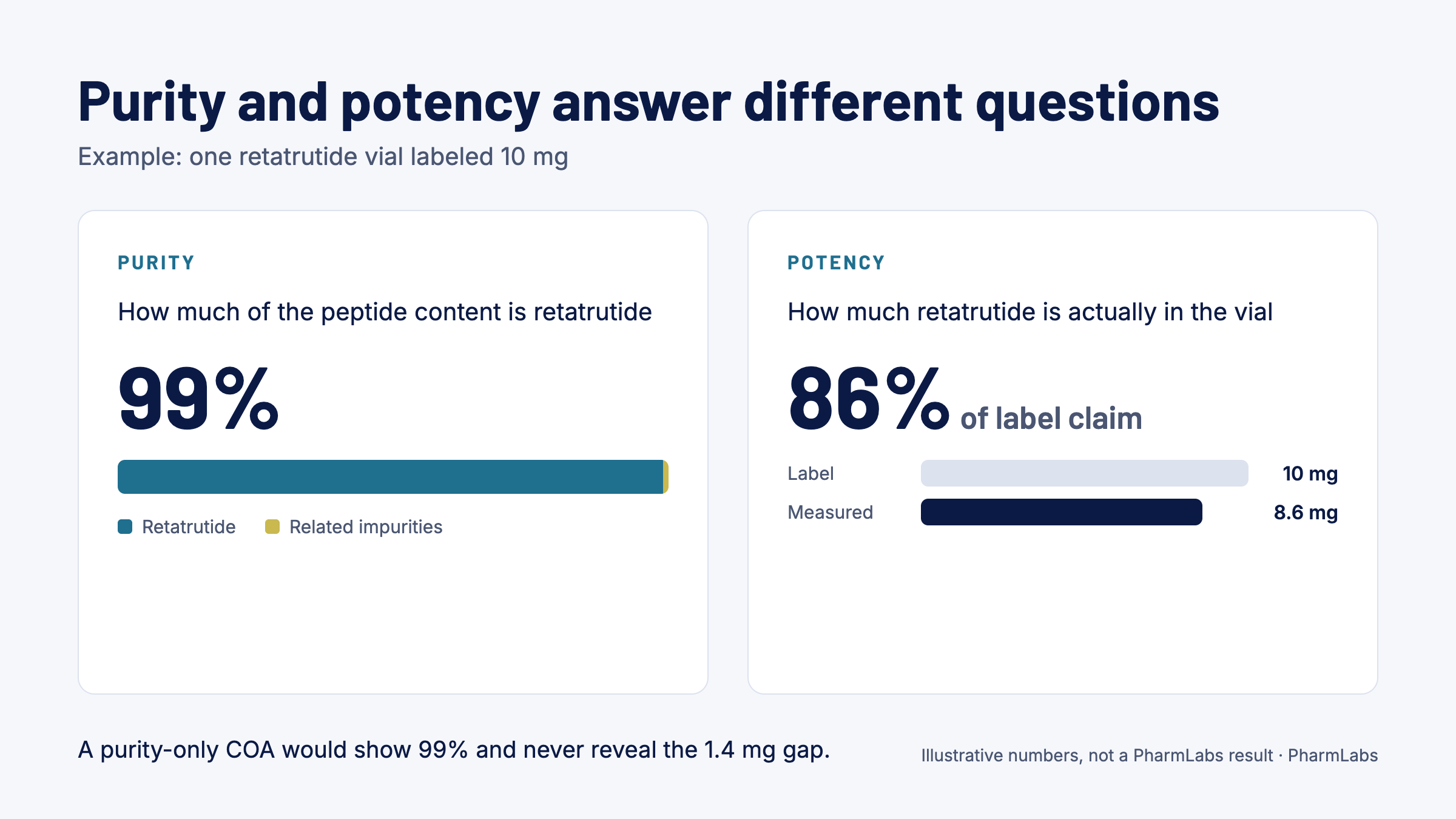
Potency is how much retatrutide is present, usually reported in milligrams and compared with the label claim. Purity is how much of the peptide content is retatrutide, compared with related impurities such as incomplete or altered sequences.
The two results can tell different stories. For example, a vial labeled 10 mg could test at 99% purity but contain 8.6 mg of retatrutide, or 86% of the label claim. A COA that reports only purity would never show that gap.
Why a high purity result isn’t the whole story
HPLC purity testing measures the peptide and its peptide-related impurities. It does not test for bacterial endotoxins, microbial contamination, heavy metals or residual solvents. Each of those needs its own test.
Check the method limits: LOD and LOQ
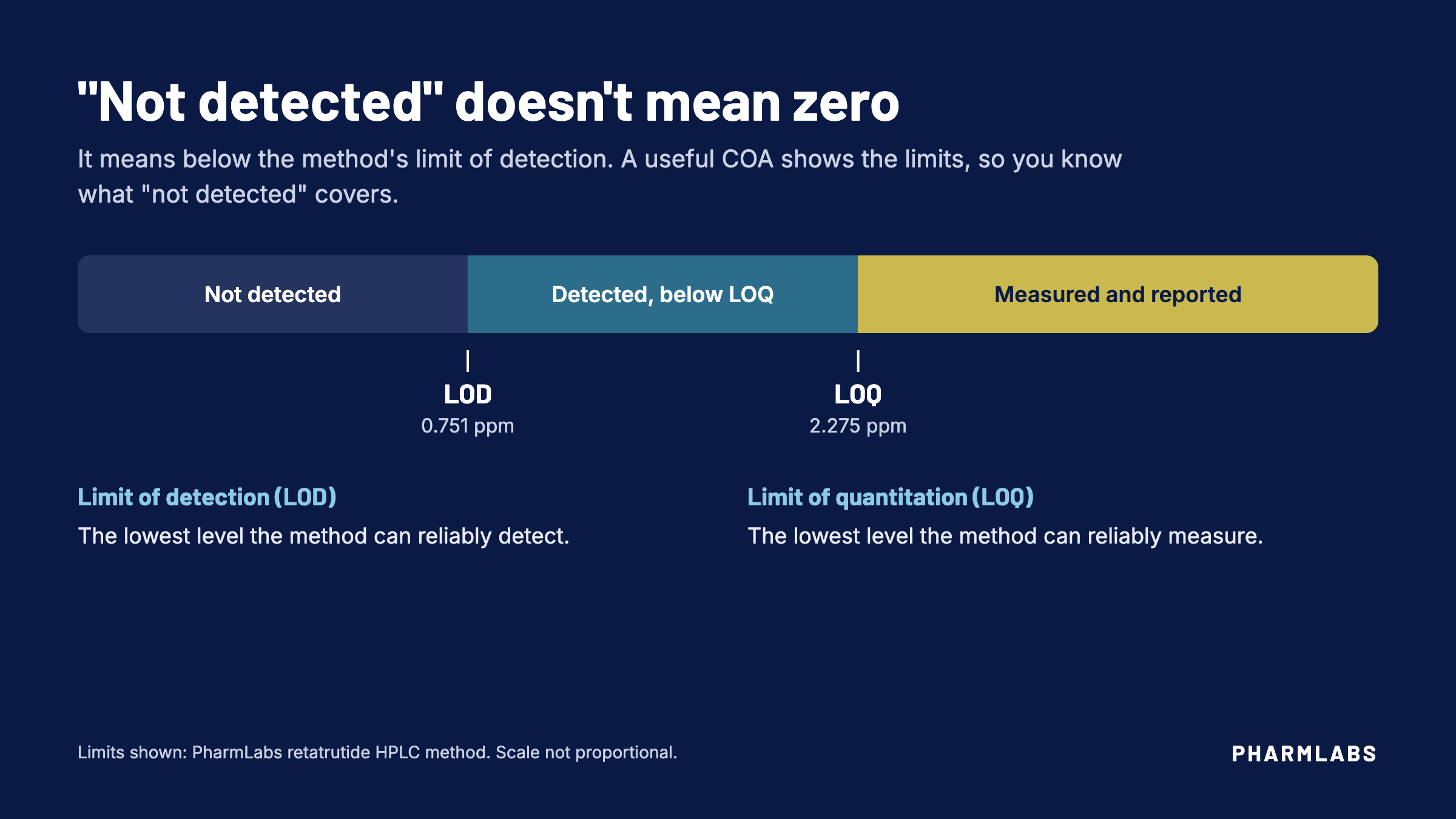
The limit of detection (LOD) is the lowest level a method can reliably detect. The limit of quantitation (LOQ) is the lowest level it can reliably measure. “Not detected” means the analyte wasn’t found at or above that limit, not that it is absent. Results without limits leave you guessing. PharmLabs publishes the LOD and LOQ for every peptide it tests, including retatrutide, in its list of peptides we test.
Additional testing for retatrutide
Endotoxin screening
Endotoxins are substances from the cell walls of certain bacteria. They can be present even when no live bacteria remain, which makes endotoxin a separate question from microbial growth.
Sterility and microbial screening (TAMC and TYMC)
Total Aerobic Microbial Count (TAMC) looks for bacteria. Total Yeast and Mold Count (TYMC) looks for yeast and mold.
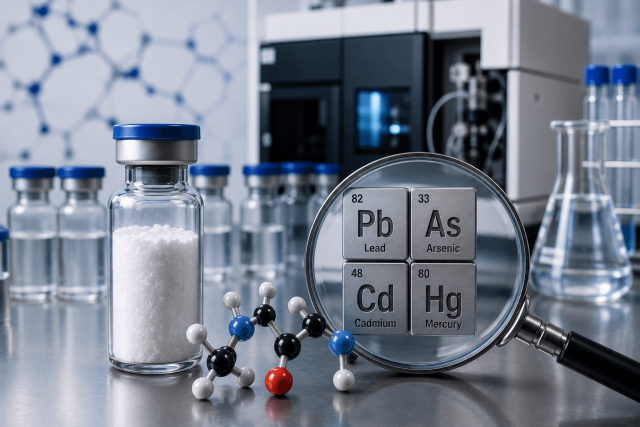
Heavy metals
Metals can enter a product through raw materials, reagents, equipment, water or packaging. They require a separate test from potency and purity.
Residual solvents
This test checks for solvents left over from synthesis and purification.
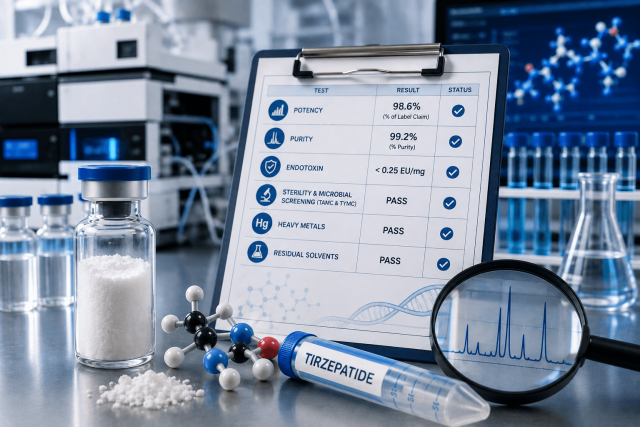
What a more complete retatrutide COA looks like
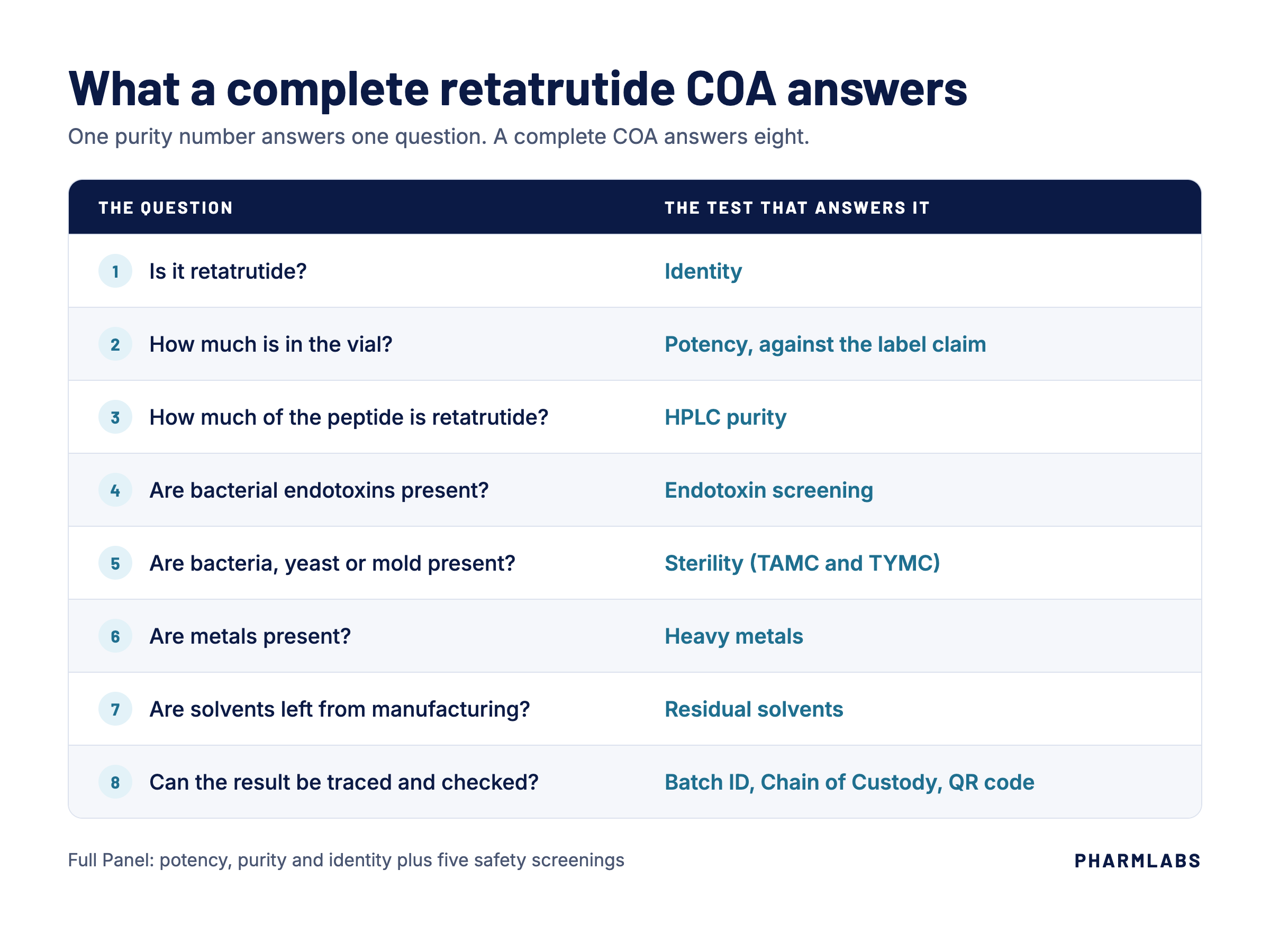
| Question | Test that answers it |
|---|---|
| Is it retatrutide? | Identity |
| How much is in the vial? | Potency, against the label claim |
| How much of the peptide is retatrutide? | HPLC purity |
| Are bacterial endotoxins present? | Endotoxin screening |
| Are bacteria, yeast or mold present? | Sterility (TAMC and TYMC) |
| Are metals present? | Heavy metals |
| Are solvents left from manufacturing? | Residual solvents |
| Can the result be traced and checked? | Batch ID, Chain of Custody, QR verification |
Why independent, accredited testing matters
A manufacturer’s own quality control is valuable, and independent testing adds an outside check. When you read a COA, check that the issuing lab’s ISO/IEC 17025 accreditation can be confirmed with its accrediting body. PharmLabs is accredited to ISO/IEC 17025:2017 by PJLA; view the accreditation certificate.
Make sure the COA can be verified
Every PharmLabs COA carries a unique QR code that links back to the original report. That protects against edited or reused COAs. If a retatrutide COA can’t be checked against the lab that issued it, treat it as unverified. You can see what a PharmLabs report looks like in our sample peptide COA.
Retatrutide testing at PharmLabs
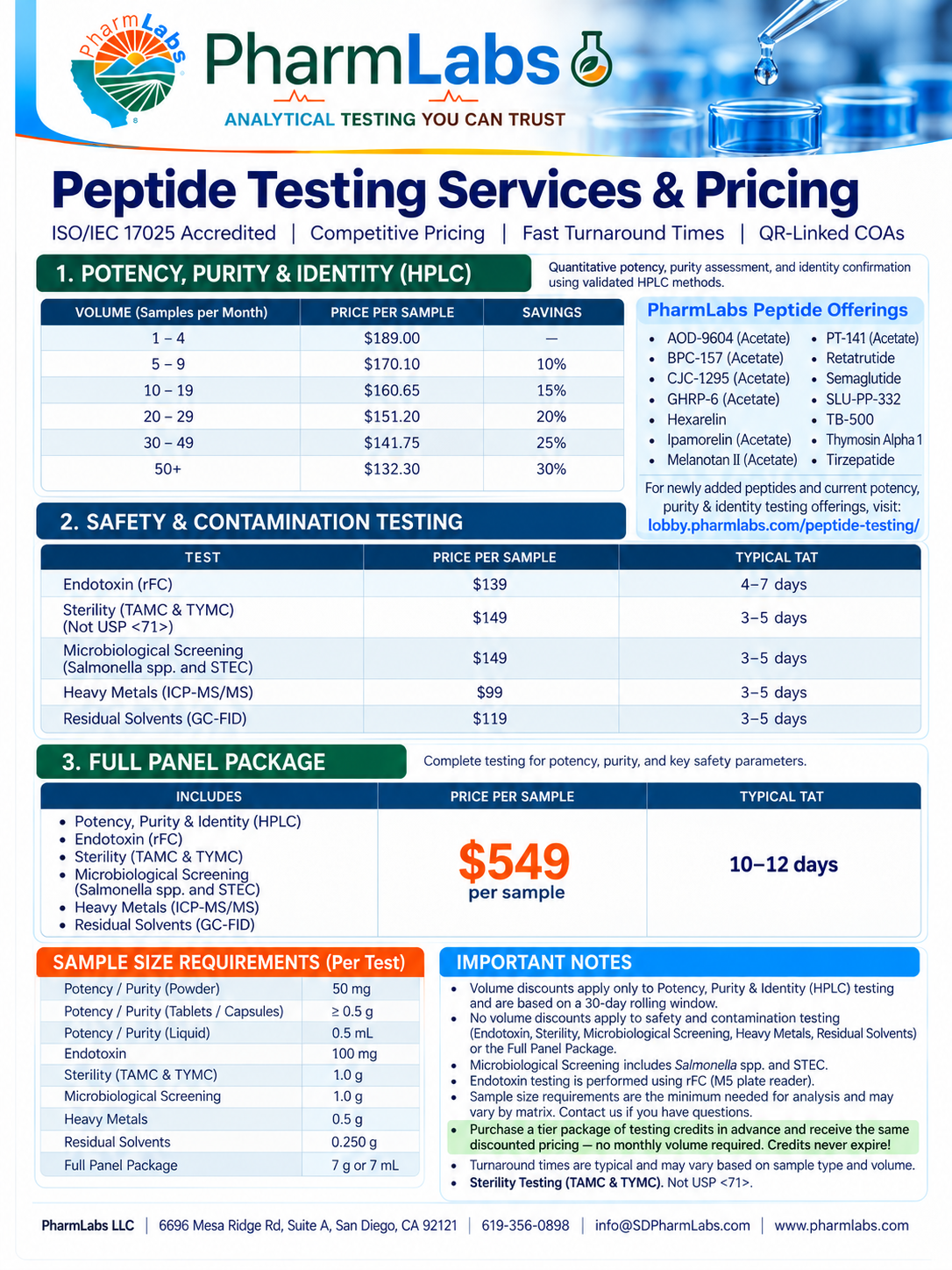
- HPLC potency, purity and identity testing
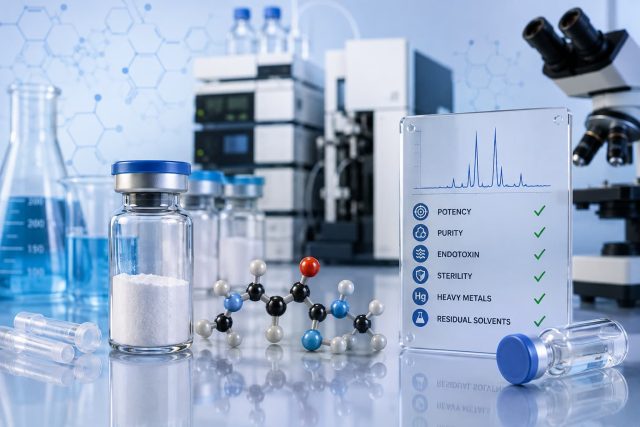
- Full Panel Package: potency, purity and identity plus five safety screenings (endotoxin, sterility, microbiological screening, heavy metals and residual solvents)
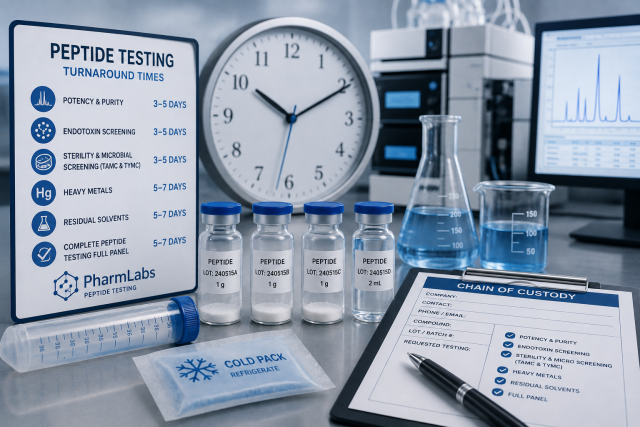
- Turnaround: 3–5 business days for potency and purity, and 5–7 business days for the Full Panel. Rush options are available depending on lab capacity.
- No minimum order, Chain of Custody with every sample, and results in the client portal
- Current pricing and a Price Match Guarantee
- Sample size requirements
Don’t judge retatrutide by one number
Before relying on a retatrutide COA, ask:
- Was the compound identified as retatrutide?
- How much was in the vial, compared with the label?
- What was the purity?
- What else was tested?
- Are LOD and LOQ shown?
- Does the COA match the batch?
- Was the lab independent and accredited?
- Can the COA be verified?
For more on reading peptide test results, see Tirzepatide Batch Testing: What a Complete COA Should Show and What “99% Pure” Peptide Really Means and What It Doesn’t.
Frequently asked questions
What does COA mean for retatrutide?
COA stands for certificate of analysis. It is a lab report for one sample or batch of retatrutide, showing what was tested, the methods used and the results.
How do you test retatrutide purity?
Send a sample to an accredited laboratory with a Chain of Custody form. The lab uses HPLC to measure purity and potency, and reports potency against the vial’s label claim.
Can a retatrutide test kit replace a lab COA?
A lab COA reports measured potency and purity with method limits, tied to a specific batch and issued by an accredited lab.
Does a seller’s COA count as third-party testing?
Only if an independent laboratory issued it and you can verify it with that lab.
Ready to test retatrutide?
Request a free quote, call +1 (619) 356-0898 or email info@sdpharmlabs.com.